The resources
Sanaphantastron's sound moves between progressive rock, new wave, and experimental music. The project is characterized by an unusual array of instruments: classic rock equipment meets synthetic sound generation and experimental, custom-built devices. The sound gains a special touch through the fragmentary use of sometimes unfinished software relics from the 1990s, which lend the project a subtle techno aesthetic.
Guitars used
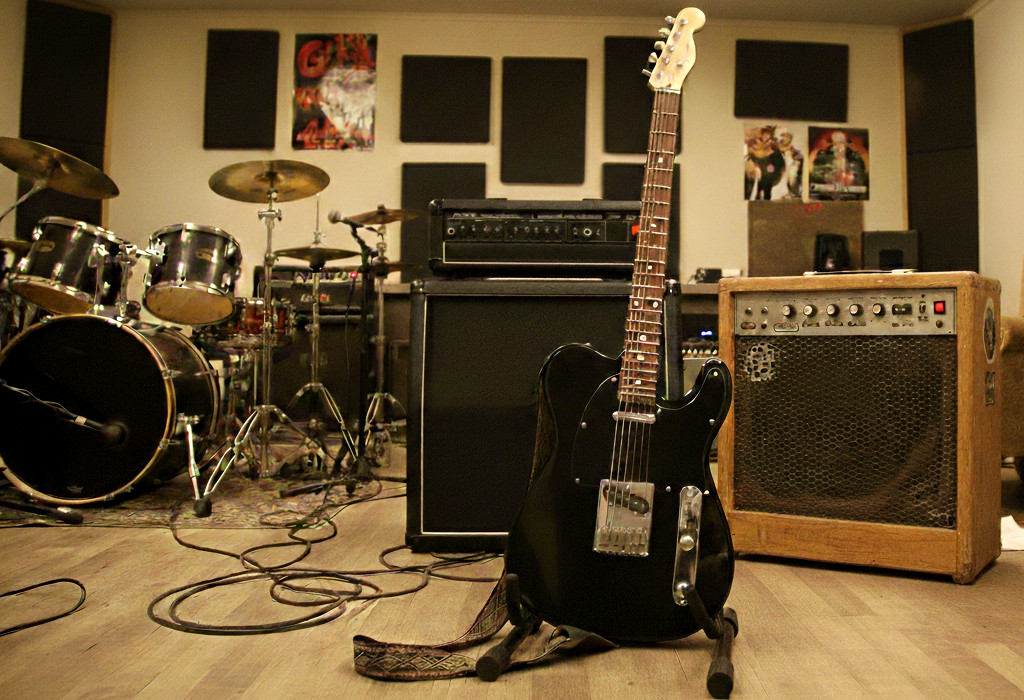
Sanaphantastron breaks with the gear fetishism of rock music. Guitarist Che Guitare deliberately uses inexpensive, no-name guitars, thus utilizing their now considerable level of quality. His argument: The quality of these entry-level models has long since surpassed the infamous "Hertie Caster" era. Through expert setup and modular "modding"—as seen in the Telecaster copy shown, which was assembled from two different low-budget models—he fully exploits the potential of these instruments. The unique sonic character of these one-of-a-kind guitars deliberately sets them apart from the classic ideals of a Fender or Gibson and shapes the individual sound of the project.
The effects units used
Che Guitare primarily relies on the Zoom G2 multi-effects unit, now only available secondhand. His setup is supplemented by a volume pedal, occasional floor effects, and various homemade devices. A key advantage of the classic G2 over newer models is its distinctive, two-digit, seven-segment display: it guarantees optimal readability even from a distance on stage. He deliberately forgoes modern conveniences like automatic sound naming or USB export. He doesn't see the Zoom G2's lack of features compared to newer models as a disadvantage; on the contrary, manually noting the parameters in text files forces him to meticulously check every fine adjustment.
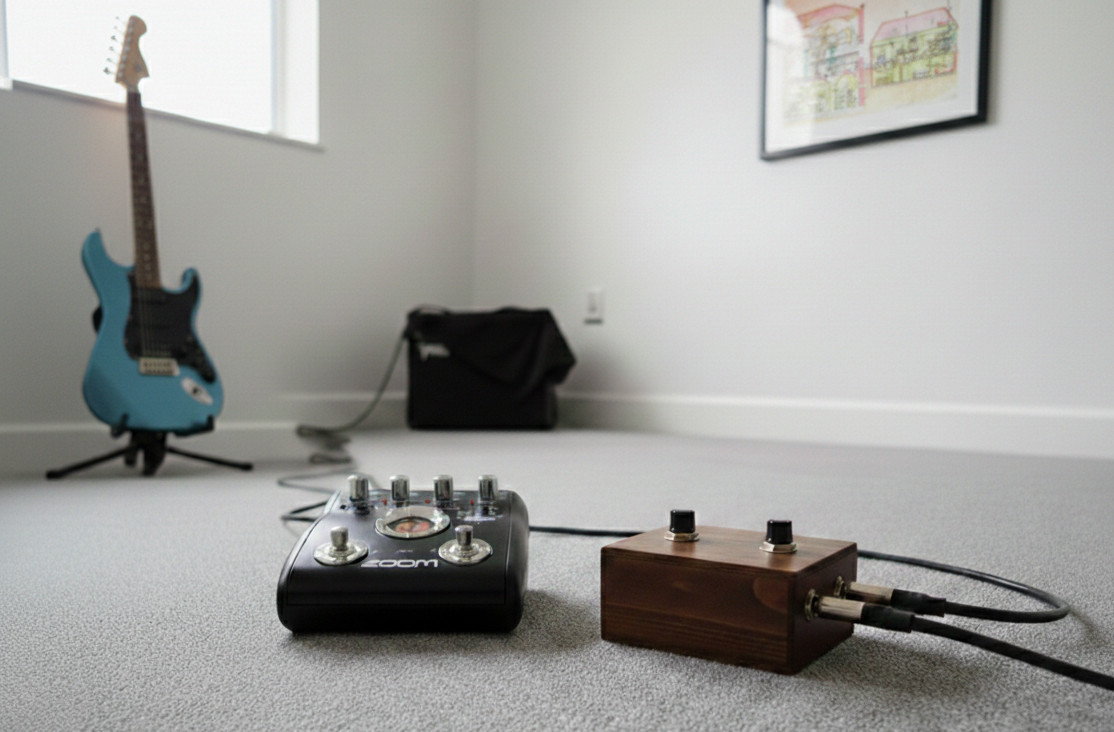
A particular highlight of his setup is the self-built treble booster in its rustic wooden enclosure. Designed as a preamp, it coaxes a pronounced high-frequency boost from the signal, resulting in a harmonically rich yet always clear distortion. Even complex chords don't get muddy but remain transparent. Whether used with real tube amps or in combination with modeling amps, the sound is impressive. At the heart of the device is a low-noise AC151R transistor, which delivers the sought-after germanium vintage sound. Those who want to delve deeper into the technology can find more information, along with further circuit diagrams for DIY projects, on the website dl4cs.de.
The synthesizers used
Besides an MS-20 Mini and a Minilogue XD from Korg, Sanaphantastron uses exclusively virtual synthesizers and sequencers, the details of which will be explained in more detail below.
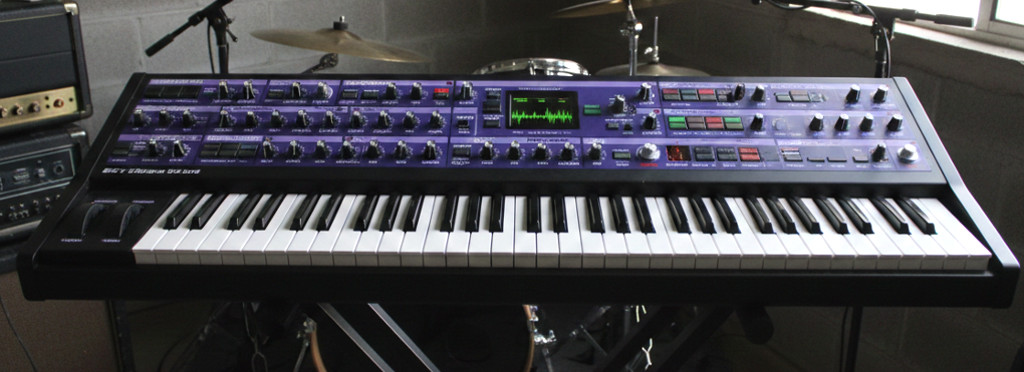
Synthesizer, sampler, sequencer and mixing console in one: The "Dream Station"
This software workstation combines virtual analog sound generation, a 32-track sequencer, and versatile stereo effects (echo, reverb, chorus, flanger) with an eight-channel mixer. The initial version, DS1, offered as freeware, impresses with its unrestricted functionality. Despite lacking VST support, the workstation boasts a characterful analog module and the ability to export in .WAV format. A key advantage over the paid version 2 is the option to apply the entire effects and filter section to samples.
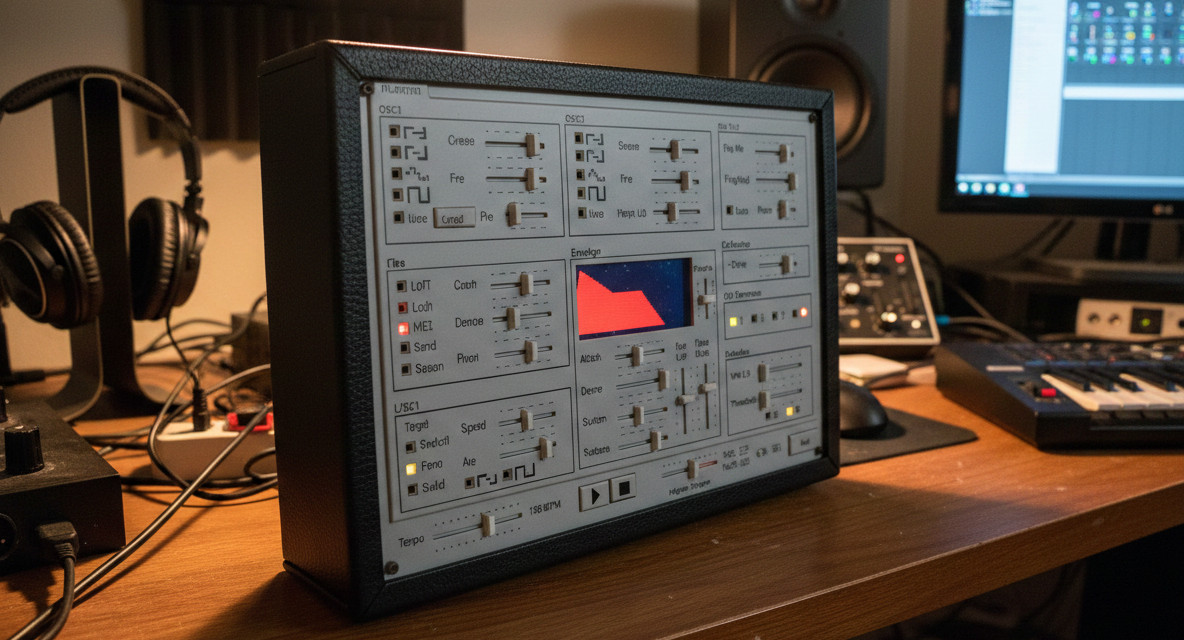
TS404: Virtual analog synthesizer with 16-step sequencer
This freeware allows up to four analog synthesizers, each with two VCOs, an LFO, a VCF unit, and an ADSR/VCA section, to play synchronous. In addition to classic features like oscillator sync and PWM, the tool offers ring modulation and echo for experimental sounds. A creative bonus is the random sequence function – perfect for generating inspiring loops that can be seamlessly integrated as raw data into other projects.
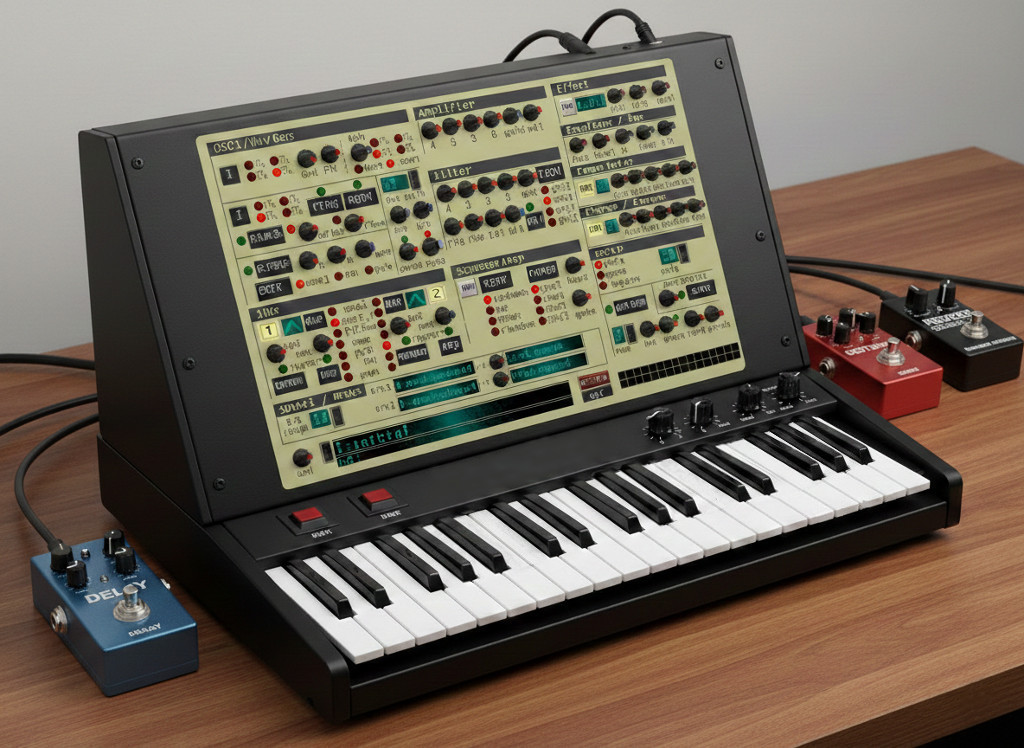
Synth1: Versatile software synthesizer as a VST plugin
The Synth1 is functionally based on the Clavia Nord Lead 2 Red synth. It was programmed by Ichiro Toda from Japan and is designed for low CPU usage, in part through the use of SSE instructions. Here are its other features:
- 2 VCOs, 2 LFOs (synchronous)
- FM, ring modulation, sync, ADSR
- 4 filter modes
- arpeggiator (synchronous)
- delay (synchronous)
- stereo chorus / flanger
- legato mode, portamento
- 16-part polyphony
- 128 presets
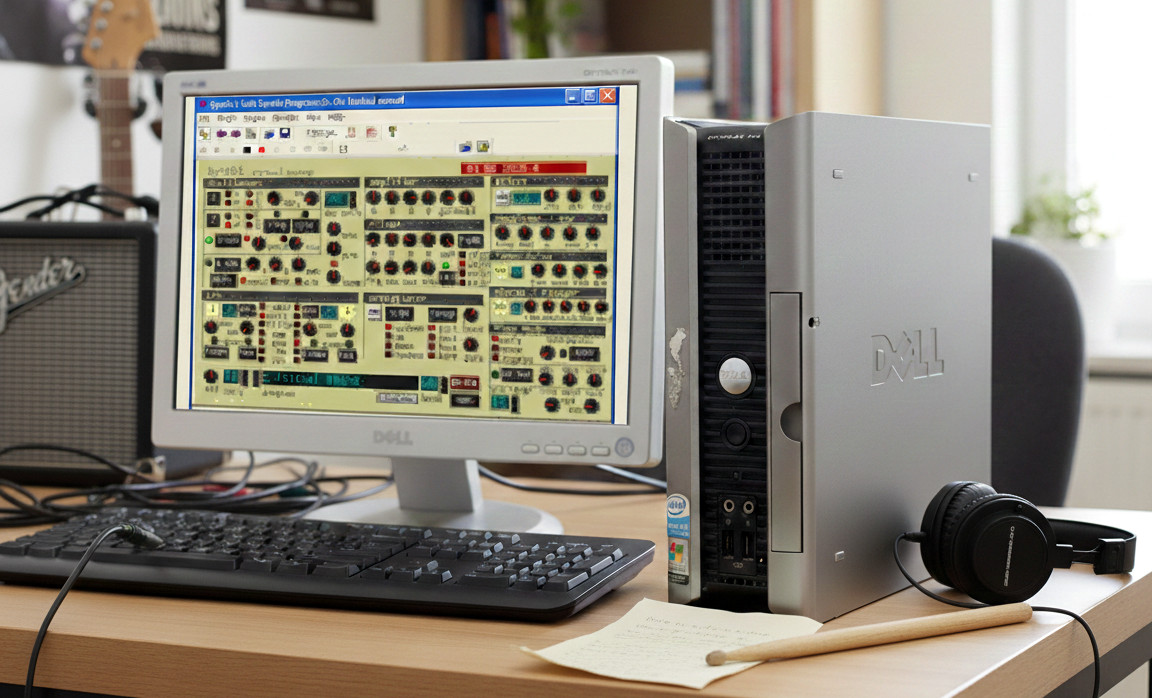
SAVIHost transforms VST plugins into standalone programs
This software, programmed by Hermann Seib from Austria, transforms VST instruments into standalone, executable programs. By simply renaming savihost.exe to the name of the respective plugin (e.g., synth1.exe), it can be launched directly in its own window – provided both files are located in the same directory. Combined with a USB MIDI keyboard, this setup is ideal for live performance. For minimal latency, the use of the ASIO4ALL driver is recommended.
We intentionally haven't included any download links here, as they are difficult to keep up-to-date. We also don't want to direct you to unreliable sources. So, if you're interested, use your search engine!
The use and manipulation of sounds
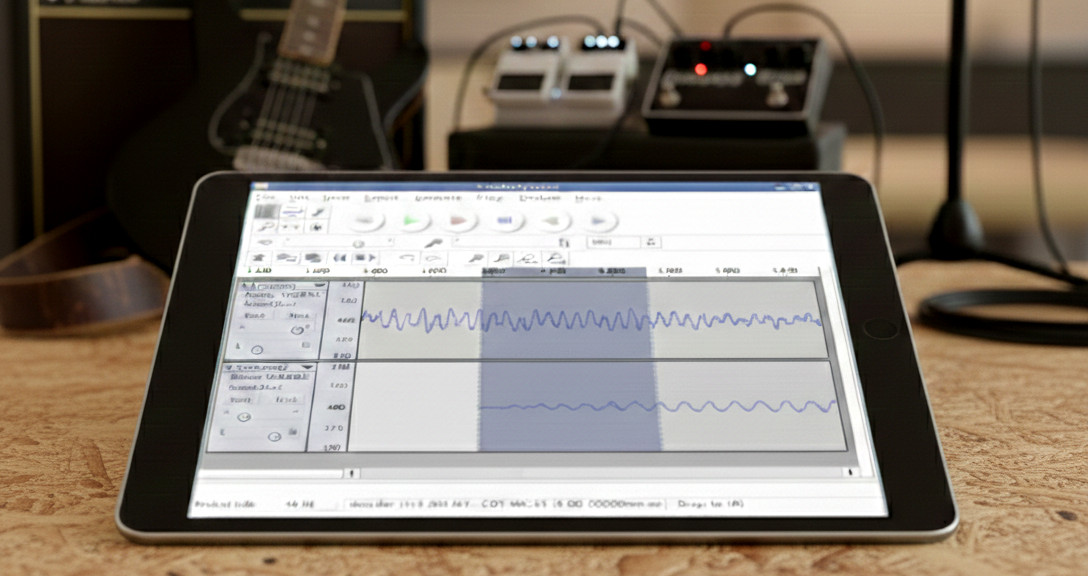
More than just a tape recorder replacement: Free multi-track recording with Audacity
Anyone who produces or records music and relies on open-source software will inevitably encounter Audacity. This editor is far more than a digital replacement for classic multi-track tape recorders, offering flexible options for complex projects. Whether recording vocals via microphone or instruments like guitars via direct connection, Audacity is the ideal tool for high-quality recordings. Numerous integrated effects and support for external plugins (including VSTs) are available for fine-tuning, and even a vocoder is included. Projects can be managed flexibly and exported to various formats, including MP3.
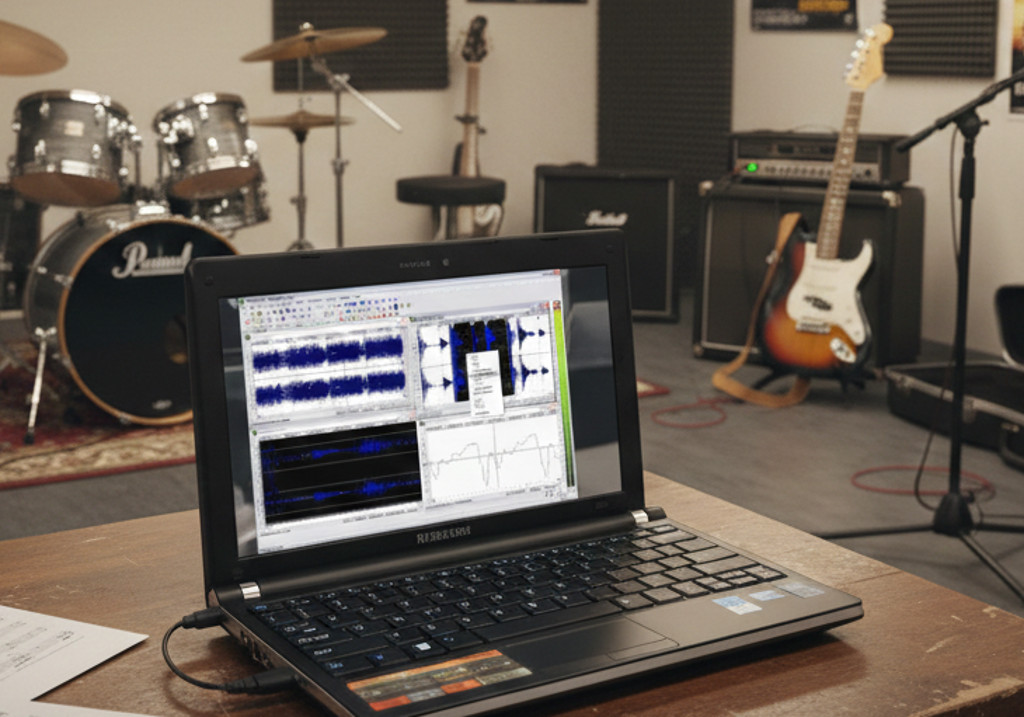
Wavosaur: A streamlined VST hub for fast audio editing
Wavosaur is a free audio editor specializing in editing WAV and MP3 files. While the program shares similarities with Audacity, its specific blend of advantages and disadvantages makes it an ideal addition to any digital toolkit. A particular advantage is its complete portability. The software consists of a single, compact EXE file that can be launched directly without installation or registry modifications. Despite its small size, the editor offers all essential functions such as cut, copy, and paste. Wavosaur truly shines with its convenient VST plugin integration, support for ASIO drivers for low latency, and real-time effects editing. Working with multi-channel WAV files is also seamless.
Minimalism with low-end hardware
In modern music production, there's often a belief that high-end computers are a must. However, experience shows that even simple computers can achieve results in both studio recordings and live playbacks that are in no way inferior to classic professional recordings. Amazing things can even be achieved with freeware, because creativity doesn't depend on computing power.
A significant portion of our material was produced on a Samsung NC10 netbook. Running Windows XP, this compact computer served as the heart of recording and mixing numerous tracks. Its portability made it the ideal companion for mobile sessions, where the focus was always on the essentials.
This workflow was complemented by a classic Dell Optiplex GX620. This ultra-small form factor (USFF) office computer proved its reliability under both Windows XP and Linux Mint. The latter particularly demonstrates how lean open-source systems can breathe new life into even older hardware, transforming it into stable audio workstations. This combination of proven hardware and free software proves that for a coherent result, the producer's ear is crucial, not the number of processor cores.
Between alien curiosity and digital efficiency
Since there was no music on Fahco Labuel's home planet, no one there would have considered artificially generating singing voices. This very fact likely explains his extraordinary interest in this area of sound design. Furthermore, he is convinced that such techniques are the future.
The artificial nature of many hits is already undeniable: using Auto-Tune and modern techniques, natural voices are manipulated until they conform to an artificial ideal. Vocalists who can sound almost synthetic even without technical aids have the best chances in current talent shows – not least because they can save on expensive post-production costs. However, Fahco sees the ultimate potential for savings in the consistent continuation of this development: when the performers themselves become superfluous and computers take over the singing entirely.
Synthetic voices: High speech quality and big singing hurdles
Synthetic "Natural Voices" are created by sampling real voices, whose words or syllables are then technically idealized. Many modern speech output programs already use this principle successfully to achieve deceptively realistic and easily understandable results. However, what works for pure speech quickly reaches its limits when generating singing: For musical requirements, this method is often too rigid, as the expressive possibilities are severely restricted and the emotional dynamics of a sung performance are hardly achieved.
Acapela: High-quality speech synthesis in web check
A well-known example of the Natural Voice method is Acapela. This speech synthesizer can be tested online in a free demo version that directly converts entered text into spoken language. Various voices and languages are available, while parameters such as speed and pitch can be adjusted to a certain extent. The model is fair: using and experimenting in the browser is free; costs are only incurred when downloading the finished audio file.
eSpeak: Fully synthetic precision for those who love to experiment
In contrast, eSpeak uses formant synthesis. This generates voice sounds purely synthetically, enabling an enormous range of languages with minimal memory requirements. The speech output remains easily understandable even at high speeds, but due to system limitations, it doesn't achieve the natural balance of the Natural Voice method.
Technically, eSpeak is a command-line-based program system that, as open-source software, can be freely used and modified at will - an ideal basis for creative experimentation. In combination with music synthesizers and vocoders, virtually any vocal style can be created. What's special about it is that pitch and rhythm can be realized with a mathematical precision that no human performer could ever achieve, even with the most sophisticated studio technology.
The stereotypical refrain voice of the Sanaphantastron track I Can Sing was created using formant synthesis and subsequent processing by vocoder software.