Whoever creates music
is always an echo of what they love.
Whether consciously or unconsciously: everything we hear leaves traces on our creative breeding ground. However, we don’t believe that artistic influences can simply be listed like ingredients on a package. We can certainly talk about the musicians and bands we admire – but exactly where this inspiration is reflected in our own music can rarely be planned on a drawing board.
True music comes from the heart and expresses a feeling for life. A message on a meta-level that often effortlessly transcends genre boundaries. This process operates more on a suggestive level: a spark that reaches the listener and ignites a resonance all its own.
That is why you won’t find a classic list of "influences" here, but rather our personal suggestions. A look at everything that has left a lasting impression on Sanaphantastron.
Hard Rock and Glam Rock
With first band experiences in the first half of the 1970s, it would be implausible to deny the influence of glam rock. Had one intentionally resisted it, that resistance itself would have ultimately been an influence. But we did that just as little as we openly admitted to many an influence. We initially played rhythm and blues, twelve-bar blues up and down. We picked up themes from The Shadows. The amplifiers were cranked until they crashed – and sometimes even smoked... We were delighted by every electronic effect that provided even more distortion. Added to this were vocals consisting of only a few spontaneously invented verses. For parties and gigs, we teased our long hair, painted our faces, wore platform boots painted with silver or gold bronze from the paint shop, and crazy, sometimes feminine-looking clothes.
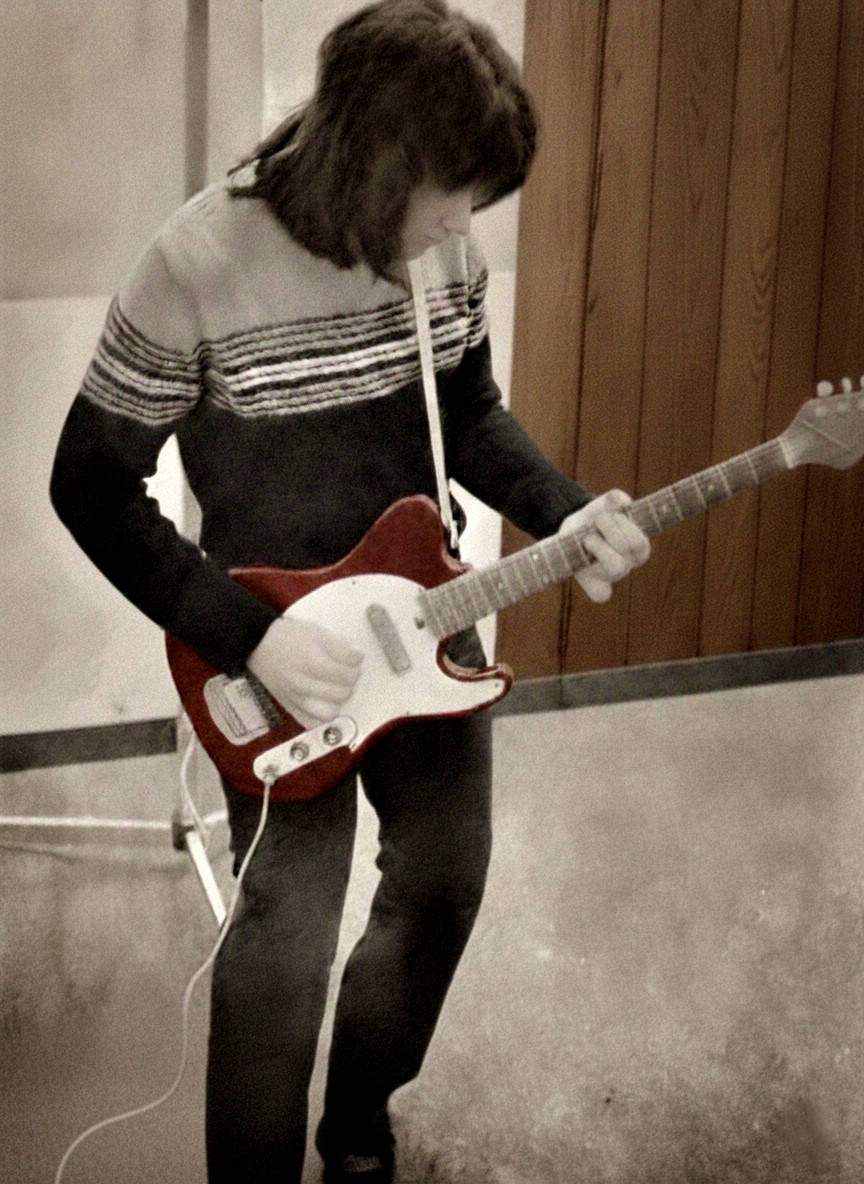
We listened to music by chart bands like T.Rex, Slade, The Sparks, Nazareth, and Alice Cooper. Often, such formations were considered part of the underground music scene before their first big hits. That increased their prestige immensely. Considered less valuable were stars produced by Chinnichap, such as Suzi Quatro and Mud. The band The Sweet, also produced by Mike Chapman and Nicky Chinn, was soon decried as a "teeny-popper" band among us aspiring musicians. However, on the B-sides of their singles, they often featured thoroughly good hard rock numbers composed by themselves. Then there were also UFO, Deep Purple, Led Zeppelin, Uriah Heep, Roxy Music, David Bowie, and Rory Gallagher. You were taken more seriously if you named them as role models.
From Role Models to the First Own Show
Everything we heard and saw, we picked up and tended to exaggerate. Although completely unknown in Germany at the time, what came out was probably already something like punk. Performing at the school festival, we felt like stars and displayed all imaginable accompanying airs and graces. To the terror of the audience – just as they had tuned in to our sound by dancing – we ended our performance with an argument about our music. But the show was fun for us. We continued it in everyday life, disrupting many a lesson at school.
Without using this term back then, we initially actually wanted to make glam rock like our idols. Probably, however, it seemed more like a parody of it. Initially referring to Gary Glitter, we soon intentionally parodied other former idols. We looked for new role models and found them in the areas of krautrock, progressive rock, and space rock. Nevertheless, one will never be able to completely shed those first influences, even if one wanted to. At some point, one always returns a bit "back to the roots."
Electronic and Krautrock
When our music gained independence in the mid-1970s and we no longer oriented ourselves toward the charts, our interest in lesser-known bands began. Many of them were from Germany and are today classified as krautrock. At the time, however, nobody used this term. Furthermore, the music was often so different from project to project as music can hardly be. Actually, it could therefore not be summarized in one genre at all. The term, probably coined by music magazines from the English-speaking world, is all the more widespread today.
With the consistent inclusion of the performers – who presented themselves more as fictional characters – and the equipment used in the artistic concept, Grobschnitt left a lasting impression. Here, even helpers like roadies were declared members of the band. A live show that was inspiring in terms of effects on the one hand, and performers with a human closeness to the audience on the other, plus equipment, much of which was self-built. While the vast majority of German bands at the time only sang in English, others, like Novalis back then, began to sing only in German. Grobschnitt, on the other hand, committed themselves as little linguistically as they did to a musical style. In addition to extended improvisations, there were thoughtfully composed and arranged musical pieces. Last but not least, they always let their listeners clearly feel their great joy in making music!
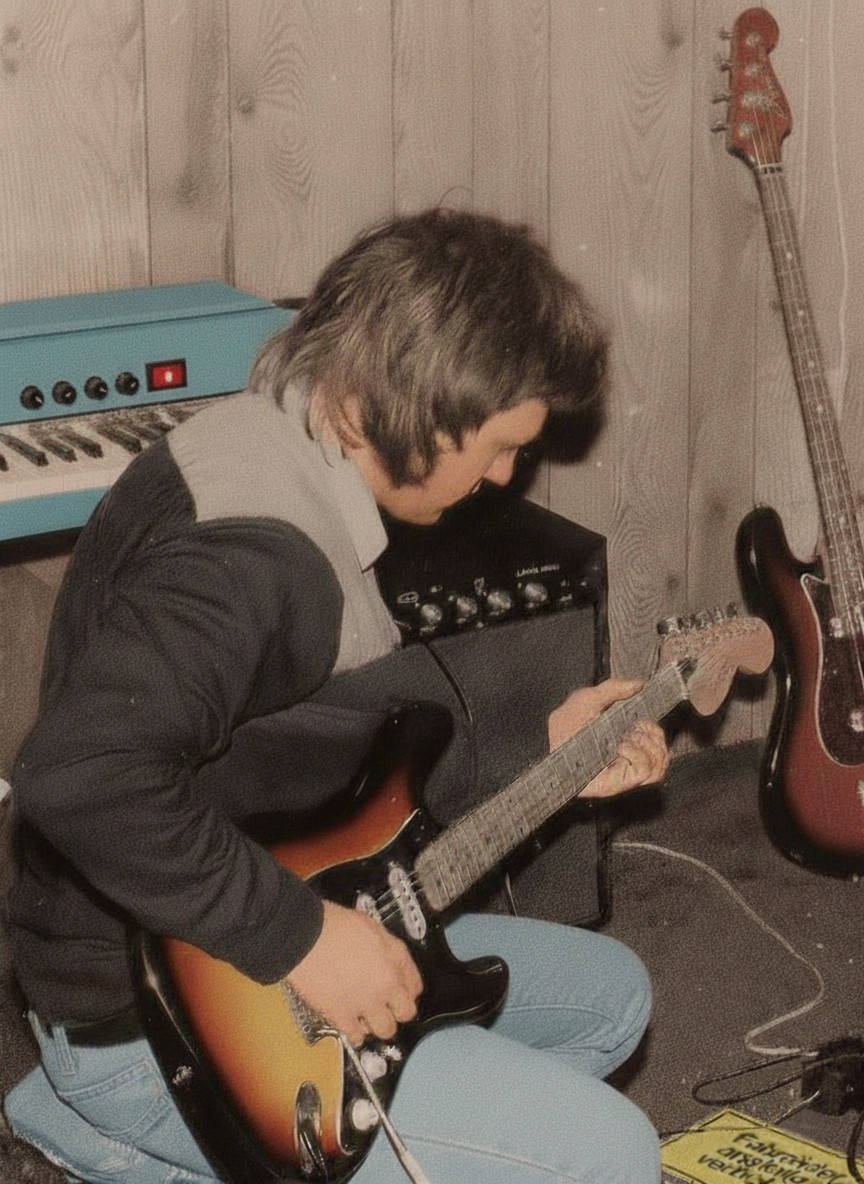
A combination of psychedelically perceived synthesizer sounds with rock elements could be found with Eloy. Spherical sounds merged with intuitively played and yet thoughtfully arranged music. Despite excessive use of the same, Eloy maintained a critical distance in their lyrics to the achievements of technical civilization. Existing influences on Sanaphantastron in this context stand alongside those regarding melody. The latter also applies to the seemingly less deep rock music of Jane with its beautiful guitar parts and pleasant-sounding keyboard sounds.
Kraftwerk and the Pioneers of the Synthesizer
Although now mostly categorized as electropop and therefore rather to be classified under EDM in this structure, Kraftwerk is found here under "Electronic and Krautrock." On the first Kraftwerk albums, continuous rhythms and danceability were rather the exception. The very first album, released before Kraftwerk under the name Organisation, strongly resembled "Ummagumma" by Pink Floyd in many places. The further musical development of Kraftwerk is extremely interesting. Experimental approaches from the first albums were picked up again in later compositions and skillfully incorporated into works that, viewed superficially, sounded more commercial with continuous danceable rhythms. Unfortunately, from a certain point on, everything just became more and more perfect. Thus, from about "Computer World" onwards, little really new was added musically by Kraftwerk. Consequently, major influences on Sanaphantastron are more likely from earlier works.
The bands Harmonia and Tangerine Dream, often mentioned in connection with krautrock or German electronic rock, were characterized by a particularly high degree of experimentation. Although typical rock instruments, including especially electric guitars, could be heard, experiments with electronic musical instruments and effect units had the larger share. Though on a somewhat different level, but by no means less experimental, were Neu! and Can. They did things that others had not dared to do until then. For example, Neu! intentionally provided the music with interference noise and presented their pieces for the first time in the form of "remixes" at different speeds. The unusual way of using electric guitars by the guitarist Michael Rother of Neu! and Harmonia has a lasting effect on Che Guitare of Sanaphantastron.
Sanaphantastron and their predecessor projects have never seen themselves as a krautrock band. Because of our geographical origin, the mostly experimental approaches, and the music often created from improvisations, one could certainly count Sanaphantastron as krautrock and in any case as electronic rock.
Progressive and Space Rock
About parallel to the turn away from hard rock and glam rock of the earlier seventies and the move toward electronic and krautrock by German bands, our interest in international musicians who moved in a similarly experimental metier also developed. With a closer proximity to hard rock, Hawkwind first caught our attention with their "spacey" lead guitar parts, the extremely electronically processed rock guitar riffs, and the synthesizer sounds often used only as accompanying effects. These flipped-out freaks seemed to really enjoy letting their audience immerse themselves in alien worlds through show and sound.
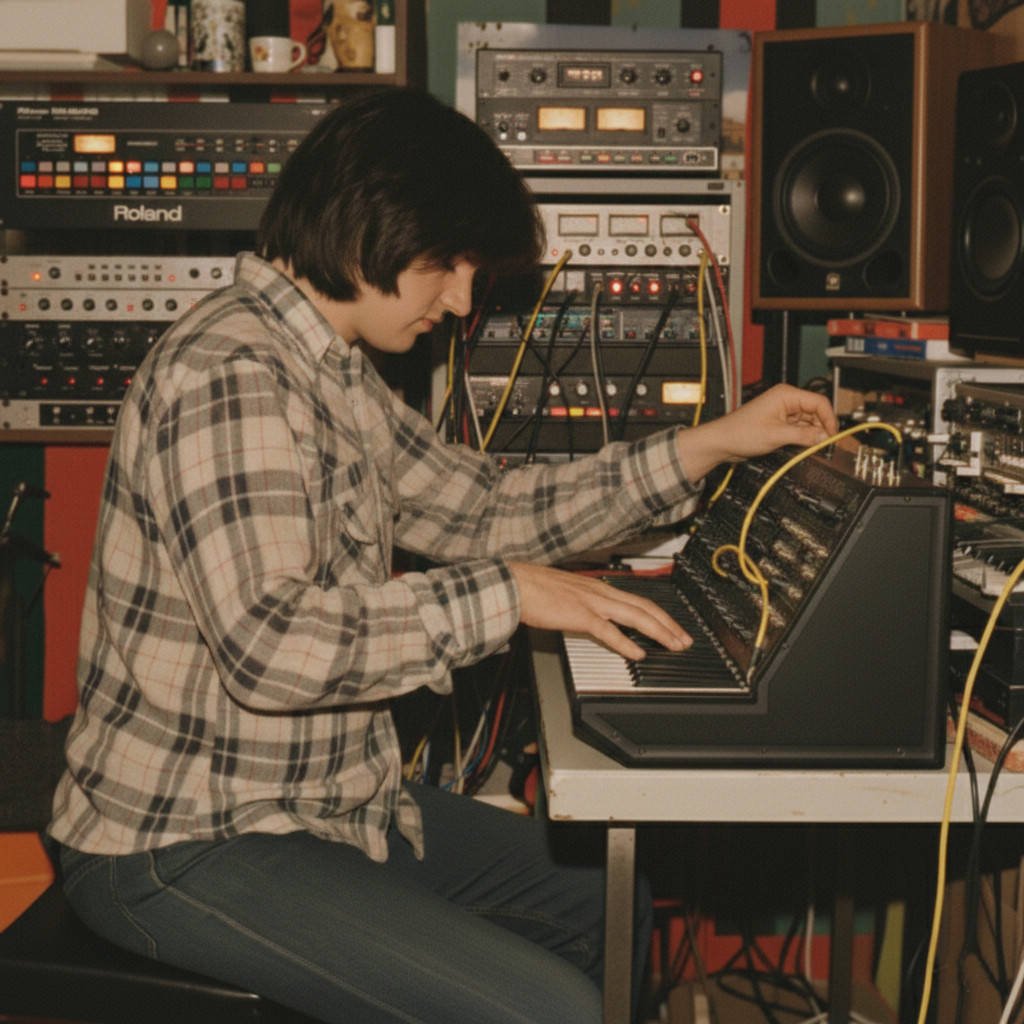
Having arrived here, one naturally couldn't get past Pink Floyd. Almost from the very beginning, they used excessive echo effects for their futuristic sound, unheard of at the time, such as on "Astronomy Domine." These devices worked back then with a tape loop, borrowed from tape technology. Initially still more uncontrolled, rhythmically synchronized echo effects were found with increasing intention. In addition, one heard early pre-produced playback inserts with sound effects as precursors to samples. The rocking lead guitar parts of Pink Floyd early on broke away from the otherwise almost dogmatic specifications of blues scales in rock music and were replaced, as with Mike Oldfield, among others by melodic influences from folk music, classical music, and the music of foreign cultures.
Between Spherical Echoes and Complex Arrangements
Mike Oldfield also used multi-track technology as a stylistic device early on. On his debut album "Tubular Bells," he presented music where he showed, as part of the work, that several simultaneously sounding musical instruments were all played by him. With Pink Floyd, perfection unfortunately replaced musical inventiveness from a certain point on, which is why the influences of earlier recordings on Sanaphantastron are likely to be rated as greater.
Until the departure of Peter Gabriel or at the latest until the departure of Steve Hackett, the essentially hand-played music of Genesis was very far from pop. Without much technology, the compositions and arrangements showed all the more experimentation. When hearing their songs for the first time, one never knew what to expect next. Genesis showed a clear distance from the "mainstream" until then and did not commit themselves to already existing styles. The music of early Genesis has a significant influence on Sanaphantastron in this context. A musical reference can be found in that repetitions in the music are sometimes avoided here as well. It develops within a piece through variations in composition, harmony, and arrangement. As with progressive rock, the schema of verses and repeating choruses mostly found in pop songs is then abandoned. Musical pieces take a course, progressing to something potentially completely unexpected.
On the other hand, Sanaphantastron also frequently features repetitive patterns with guitar riffs and lead parts with electronically processed sounds, as well as synthesizer sounds as found in space rock. As there, the lyrics repeatedly touch on themes of time, space, and fiction. An effect on Sanaphantastron also comes from the musical work of Gong, which is full of ideas. In the environment of progressive rock, influences on Sanaphantastron emanating from Jan Hammer and his collaboration with Jeff Beck should also not go unmentioned.
New Wave and Post-Punk
Initially used as a term that stood for more or less everything somehow related to punk, New Wave in the 1980s increasingly referred to bands that had less and less in common with original punk. These picked up other musical styles or used musical instruments that were untypical for punk. They used, for instance, also or even only synthesizers in their music or turned to extremely experimental music, such as Tuxedomoon. The early Human League (EP "Dignity Of Labour") declared, in the sense of "No Future," that it would become inevitable for musicians to become slaves to technical development.
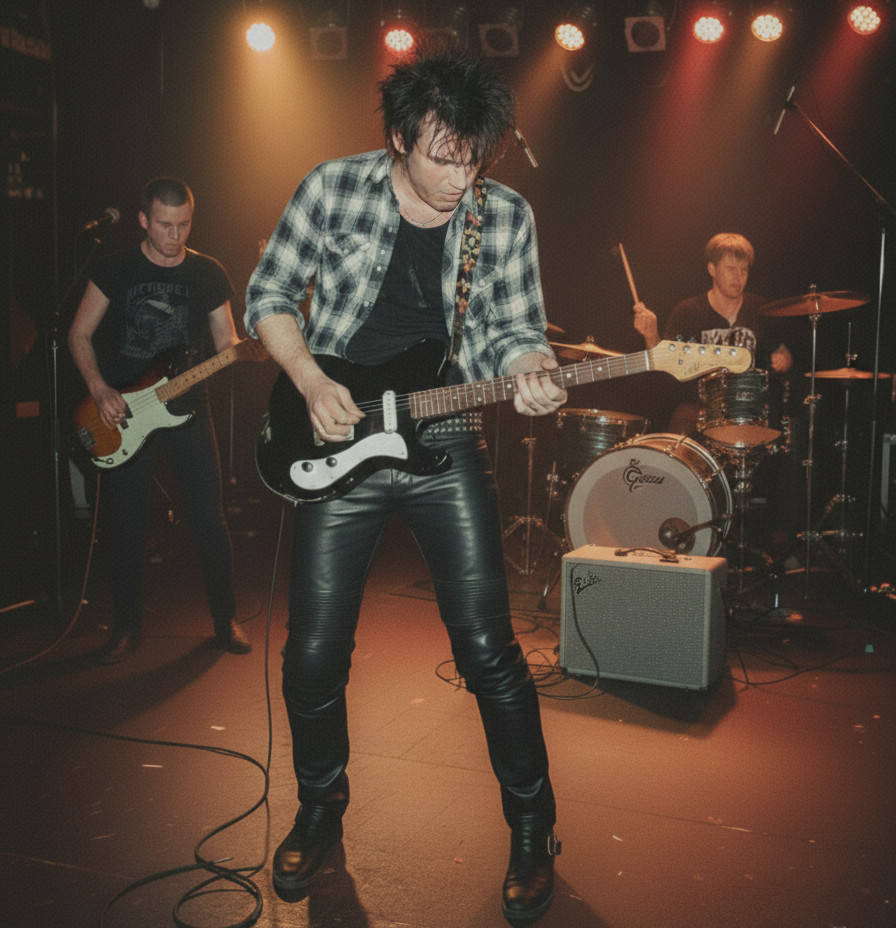
As a demarcation from the original meaning of New Wave, the term Post-Punk emerged. Bands developed their own socially critical philosophies that distanced themselves from the "No Future" dogma of punk or further developed this way of thinking, such as Devo with their de-evolution theory. Others turned even more clearly away from the expression of typical punk but picked up the "No Future" philosophy and expanded it, especially in a musical sense. Representative examples here are Joy Division or Siouxsie and the Banshees. The excellent guitar sounds on "Join Hands" had a lot to do with punk in spirit, but by no means in a musical sense.
For other bands, the joy of making music was simply at the center, and they distanced themselves from the high-mindedness of progressive rock in a punk-conform way. For this reason, but possibly also only because they became successful during this time and people hardly knew how to classify them elsewhere, the B-52's, for example, were mostly assigned to New Wave. With wit and (self-)irony, the "American Way of Life" was at the center. Based on this, a lifestyle developed that was also formative for the German New Wave, the Neue Deutsche Welle (NDW). While punk is hardly to be seen as an influence for Sanaphantastron, this applies all the more to many of the bands listed here, which are counted among the representatives of the extremely inhomogeneous genres of New Wave and Post-Punk.
Goa and Psytrance
Sanaphantastron sees itself as close to Goa in that the music sometimes experiments with neurological effects that can also be caused by the consumption of psychedelic drugs. At the same time, Sanaphantastron strictly rejects the consumption of chemical drugs; the music itself perhaps wants to be something like a drug for performers and consumers alike. Means used include, for example, foreign tonal scales, modifying sounds, hypnotic sound progressions, and repetitive musical sequences that alternate with dynamically developing patterns.
With all the technology used, Sanaphantastron also uses conventional instruments such as guitars and drums, or samples thereof, as sound generators. This is sometimes done to be able to present styles that could not be done hand-played. In doing so, Sanaphantastron enjoys being inspired by other musicians from the areas of Goa and Psytrance.
Through frequent use of echo effects and filter effects (VCF) changing in frequency, Astral Projection, for example, achieves a very pleasant and rhythmically well-thought-out "space sound." Often only unconsciously perceptible, repetitive sequences are frequently modified only in subtleties, which leads to a hypnotic effect for the listener. Because conventional instruments have since gained the upper hand here, Infected Mushroom have transformed from a Goa project into a psychedelic band. There are still interesting and often very organically perceived sounds. Particularly noteworthy are the electronic effects applied to the vocals, sometimes to the point of making the singing unrecognizable.
With arrangements of "One Of These Days" (Pink Floyd) and "Being Boiled" (Human League), one hears interesting music from Haldolium, which actually originates from other genres, alongside various typical psytrance tracks. With great musical variety, the special use of voices and the use of samples of classical musical instruments such as violins or piano make the appeal of the music of RMB.
Electronica and EDM
The many variants of electronic music can be roughly summarized under the contrasting main genres of Electronica and EDM. Electronica stands for styles that are less mass-compatible or are further away from the "mainstream." In contrast are the subgenres of EDM (Electronic Dance Music), with danceability as the main characteristic. This characteristic can also be found in Electronica, but it doesn't have to be.
Modern Sound Generation at Sanaphantastron
Characteristics of both directions are the (almost) exclusive electronic sound generation through synthesizers, samplers, and drum machines, or also software-based music production (native processing), which has now moved very much to the fore at Sanaphantastron. This is not only during recordings but also live (though by no means exclusively). It is not uncommon for all sounds in musical pieces by Sanaphantastron to be synthetically generated. Just as frequently, however, one also finds samples of non-electronic, acoustic, or electric instruments. With the exception of the percussion instruments, the samples are always self-recorded or generated, especially the extensive guitar samples. In live performances, in departure from Electronica and EDM, directly hand-played instruments such as electric guitar, electric bass, and keyboard are also used.
Music from Sanaphantastron can be located sometimes more in the area of Electronica, sometimes more in the area of EDM. In the latter, parodistic traits can also be found. Further inspiration comes from countless projects. Representative examples here include Off, Snap!, Dune, but also Komputer, Dada Life, and Mikron 64. Good danceable rhythms and pleasant sound experiments can be heard from Paul van Dyk. Music by well-known artists appears in a new and unmistakable guise. Just as uncommitted as Sanaphantastron and therefore to be seen as a very significant influence is likely Moby.
Pop and Disco Music
For musicians with a broader range of interests, all music they hear inevitably becomes an influence. It therefore makes no sense to deny that there are also influences for Sanaphantastron from the areas of pop and disco. One was all too often virtually forced to hear such music. When influences of such music are consciously picked up by Sanaphantastron, it is often in a slightly exaggerated way. Although Sanaphantastron takes a distant stance because of the commercial character of such music, it does not have to be generally rejected. Behind it are also musicians with ideas and often a lot of skill. This always seems to be the case most when the musicians have asserted themselves with their ideas against the ideas of the record labels.
Interestingly, similar mechanisms are also found where one is not dealing with major labels. While many musicians limit their artistic freedom by taking the style of only one or a few bands as a model, specialized labels very often limit musicians by expecting a sound already known and classifiable from other bands. Sanaphantastron therefore partly rejects techno, punk, or heavy metal labels even more than major labels. There is therefore no reason for embarrassment in evaluating much of the music produced by Frank Farian as not bad at all or in having fun listening or dancing to "Pop Music" by M.
Dada and Fluxus
Sanaphantastron does not commit to anything, not even that there might be influences from the Dada movement. Similarities with Dadaist music would therefore be purely coincidental. If a Dadaist influence were stated at this point, it would contradict Dadaism. In this respect, there is an intentional non-influence of a Dadaism that, from the perspective of the Dadaists, does not exist at all.
In essence, Sanaphantastron rebels against a value system in which music is a commodity measured exclusively by sales figures. The music of Sanaphantastron does not have to sound good; it can also have been created by chance. It will never be played or reproduced exactly and can therefore sound different every time live. There are also musical pieces that are unique. Those are therefore only played once. The lyrics need be neither sophisticated nor linguistically correct. But this can also apply. And then perhaps all the more so.
Music is inseparably connected with the context of its creation. The actual work is consequently not the pure listening experience of the music. All performers and the instruments and devices they use belong to the work. Every object can become an instrument, every sound event part of the work. Due to the complexity, it is undefinable what the actual work actually is. Strictly speaking, even the nutrition of the performers would have to be seen as part of the work. At the center of the music of Sanaphantastron, however, stands the creative idea. Due to the fluid transition between music and life, or rather the unity of music and life, it is ultimately unpredictable what of it reaches the listener. What is to be avoided in any case is the separation of music from life. Therefore, free in the sense of Fluxus: Every human being is an artist, every human being is a musician! And life is music, music is life!
And what has come of it?
Once you’ve explored these suggestions, you’ll find Sanaphantastron’s musical answer at the very bottom of the Genres page. Featuring images, lyrics, and background info for every track you can listen to there!